
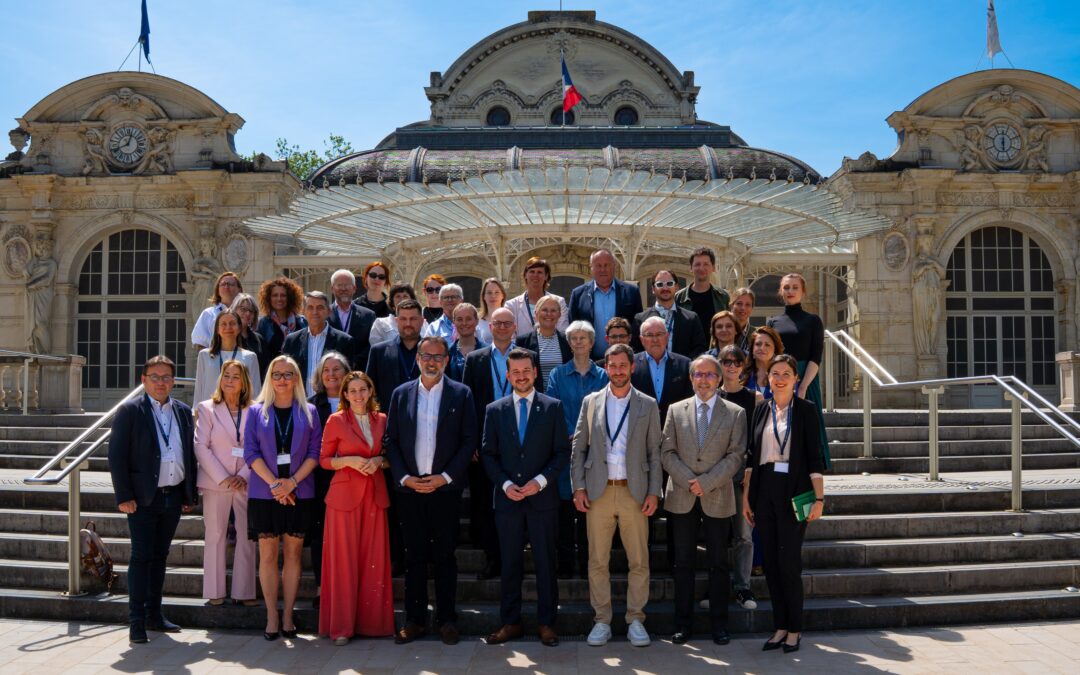
On 29th April 2026, members of The Great Spa Towns of Europe Association (GSTEA) gathered in Vichy for the first General Assembly of 2026.
The trip included a series of meetings, discussing heritage management strategies and revising the Property Management Plan — the formal planning document required by UNESCO — as well as the Action Plan.
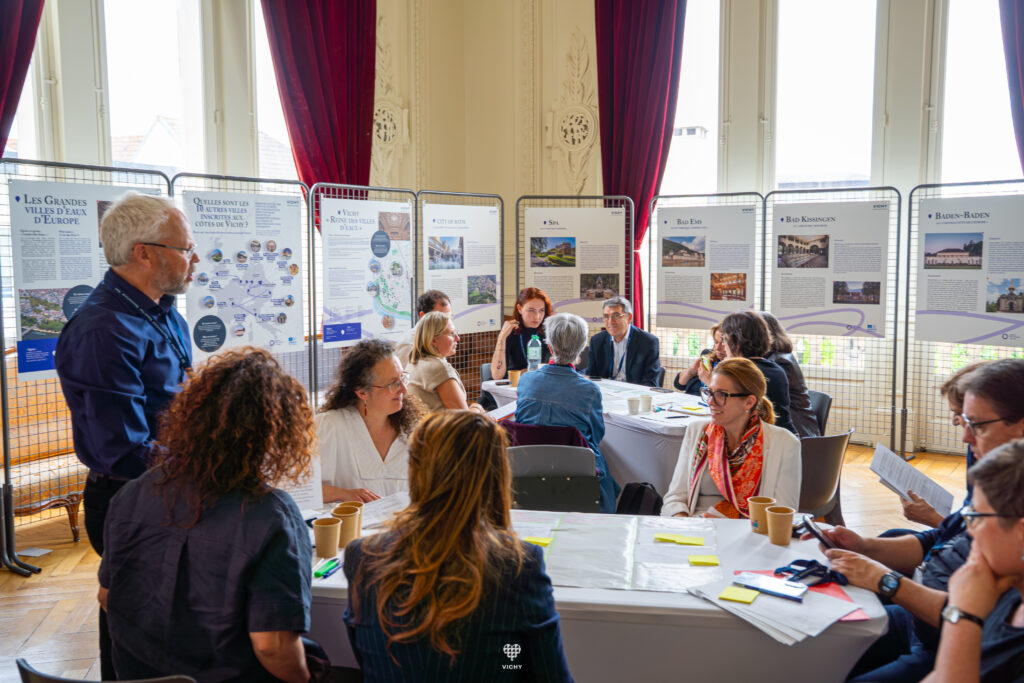
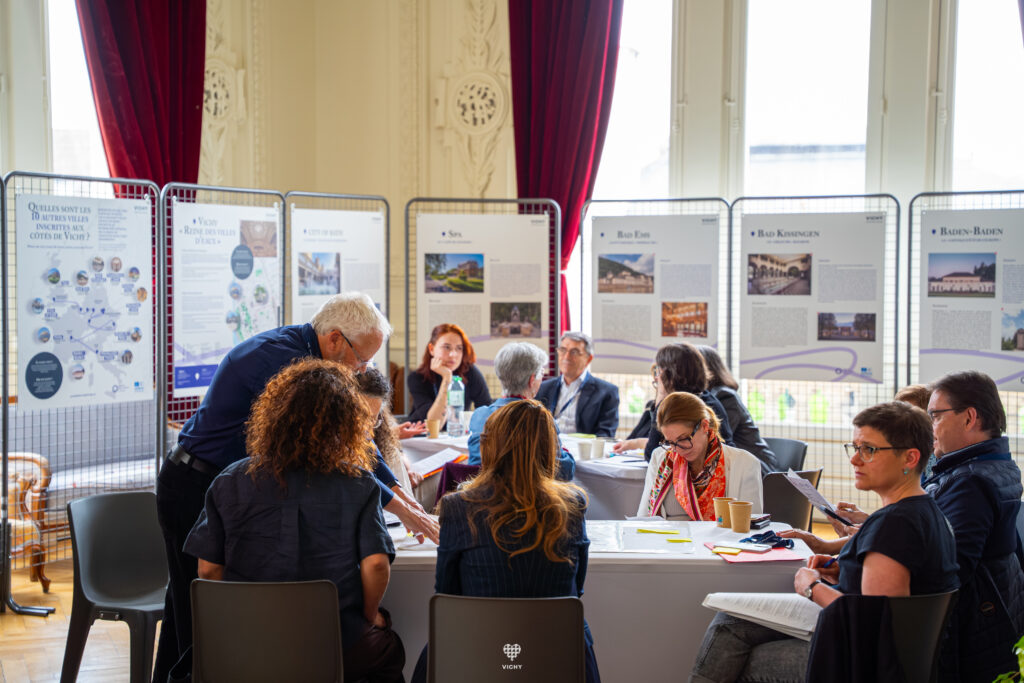
Delegates also attended group workshops on monitoring the impact of climate change, covering how environmental changes can affect natural features (like the mineral springs) as well as architecture, infrastructure and the urban environment overall. Both natural and manmade features are key components of our heritage assets, so monitoring and protecting them is part of preserving European spa heritage.
Delegates worked together to map out the impacts of climate change on different elements of heritage, building plans for climate change adaptation and disaster risk frameworks.


Working Together
Participatory governance is how The Great Spa Towns of Europe operates. As a serial, transnational UNESCO World Heritage Site, comprised of 11 spa towns from seven countries across Europe, working collaboratively is essential for protecting a heritage that exists across borders. Partnerships, joint projects and sharing resources, knowledge and ideas are the backbone of how the Association works, and our General Assemblies help to move things forward in person.
The General Assembly is made up of political representatives of each town, working alongside experts in heritage, conservation, tourism, community engagement and climate change. The Great Spa Towns of Europe’s Youth Forum, formed of young people living across the spa towns, also participate in decision-making.
While each spa town has its own local legislation, the UNESCO inscription creates a structure that can govern alongside, meaning projects can be created collaboratively and management commitments can span the entire network.
Finding Inspiration
Site visits are a key part of General Assemblies. The host town arranges visits to key heritage spots in their town, especially to show recent restoration or community engagement. These act like case studies and show an example of challenges and successes of heritage-friendly regeneration.
Delegates were taken on a guided walking tour of Vichy to see the key heritage attractions as well as understand the developments. Attendees were impressed and inspired by the carefully considered work, which balanced modernisation with preserving heritage, history and the cultural feel of the town.
The Parc des Sources – a major heritage monument and the epicentre of the town – was reopened last summer following extensive construction work. The restoration project included renovating the historic bandstand for festivities, live music and public events; repairing the Fer à Cheval shopping arcades; restoring the forecourt to the Palais des Congrès-Opéra and more.
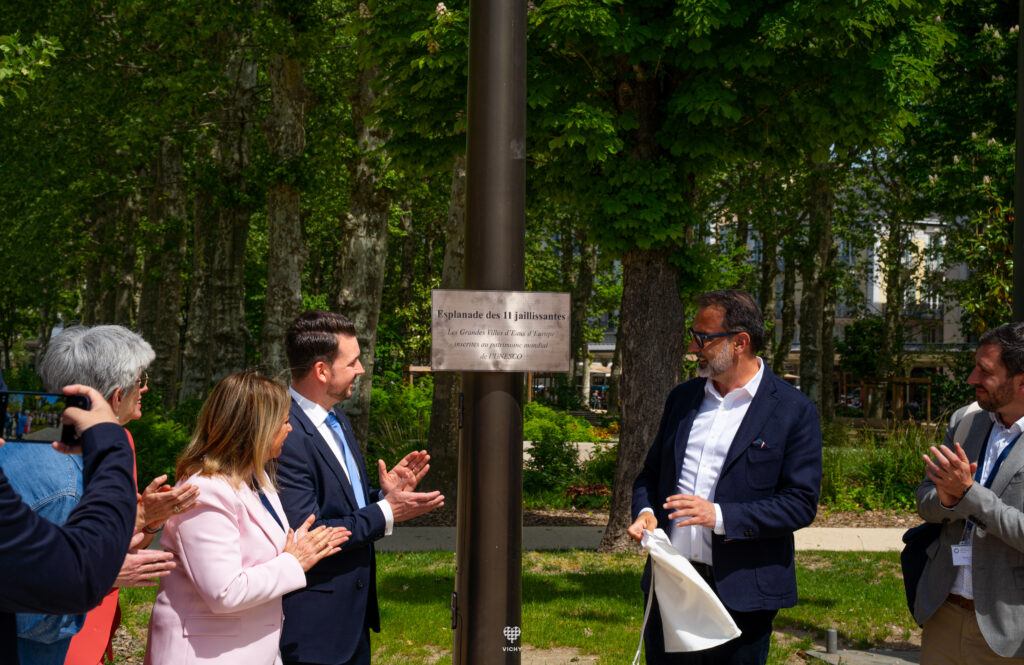
As a celebratory addition, 11 dancing fountains were added to evoke the 11 towns within our World Heritage Site. As well as being picturesque, the fountains are cooling features in summer!

Study tours of The Thermes Callou were also arranged, giving an overview of the 18 months of restoration work. The transformation of these historic baths respected the spa building’s architecture and history while reducing its carbon footprint. The success has prompted a wider modernisation across Vichy’s accommodation, with overhauls underway at the Ibis Hotel, the Résidence Callou, the Vichy Célestins Spa Hôtel and the Mercure.
Throughout Vichy, new signage has been installed to influence how residents and visitors navigate the town. With priority given to natural wayfinding (such as using notable buildings or natural landmarks), 13 orientation tables, including one monumental one in the centre of Parc des Sources, and 51 heritage plaques on the city’s most iconic buildings and landmarks have been installed. The city now acts as an open-air museum, embedding cultural heritage and European spa history in everyday life.
Alongside, a new, immersive exhibition is currently being created in and beneath the Hospital Spring Pavilion, which houses a spring of water used widely in cosmetics. A crypt is being created around archaeological remains found during on-site excavations and digital totems will be installed in the pavilion’s lobby. The site is expected to open in September 2026.
Vichy’s recent and ongoing developments are an example of what our spa towns are achieving at a local level, which is a clear result of a strong network of international relationships and collective action. The town has used its World Heritage status as leverage to attract considerable investment and funding, which has then been channelled back into heritage-friendly conservation and regeneration.

Images ©Ville de Vichy. Our thanks to the team in Vichy for hosting our General Assembly, particularly Mayor Frédéric Aguilera, Deputy Mayor Yves-Jean Bignon and Site Manager Anke Matthys!
This was the first General Assembly held during the anniversary year of The Great Spa Towns of Europe, as 2026 marks five years since being inscribed as a UNESCO World Heritage Site (24th July 2021).
The Great Spa Towns of Europe
The Great Spa Towns of Europe is a serial, transnational UNESCO World Heritage Site comprised of eleven spa towns across seven European countries. Together, these towns comprise one ‘property’ .
From the hundreds of spa towns across Europe, these eleven are the most authentic examples of the European spa phenomenon. As epicentres for social, cultural and political innovations, these spa towns shaped architecture, urban design, medicine, health and wellness tourism and modern European identity.
The site was inscribed on the UNESCO World Heritage List on 24th July 2021; the highest international recognition for global cultural and natural heritage sites. The Site is managed by The Great Spa Towns of Europe Association, formally registered in August 2022 in Baden bei Wien, Austria.